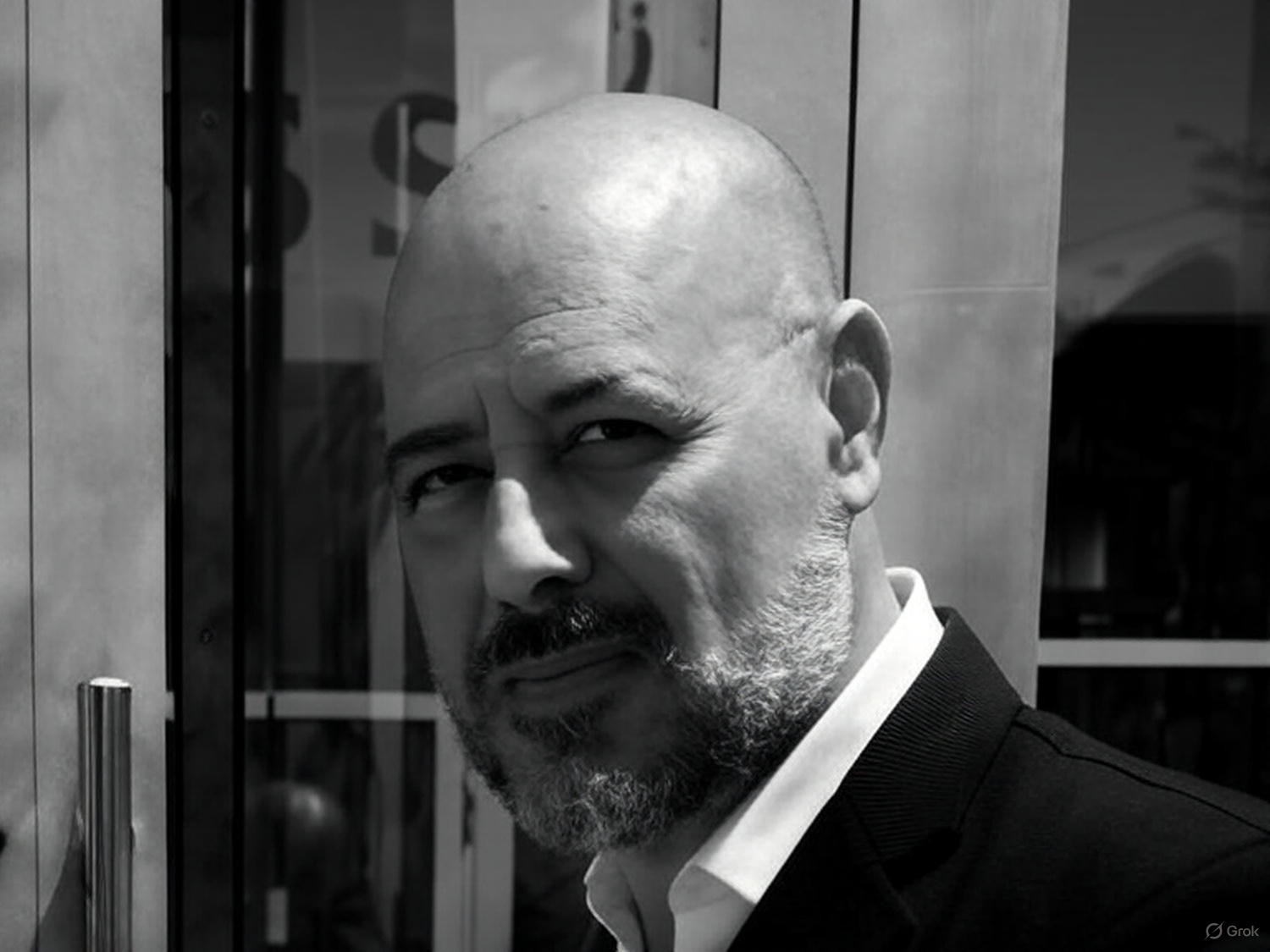
Dance Teacher
The dance floor as witness and microlab for ownership, partnership, and unmediated truth.
Dance became my traveling companion for as long as I can remember. I danced to get out of trouble as a toddler, long before I understood it as anything formal. Before language stabilized, movement did. I learned early that bodies communicate long before words do.
As life expanded, so did the complexity of moving with other people — growth, crushes, relationships, work, responsibility. So many ways to coordinate. So many expectations layered on top of one another. So much confusion introduced by explanation, intention, and effort.
Circa 1986, I saw the movie Dirty Dancing. What stayed with me wasn’t the romance. It was the structure. In that story, partnership dancing functioned as a way to cross boundaries that language couldn’t resolve — class, authority, belonging. Two people entered a system with rules neither of them controlled, and coherence emerged not through argument or persuasion, but through timing, posture, and shared movement. The dance didn’t erase the friction. It made it navigable.
That was the first time I saw movement operate as something stricter than expression — as a medium capable of organizing relationship without explanation.
When I entered the field, I went looking for that. Instead, I walked into substitutions for the partnership skills I was instinctively after — hierarchy standing in for connection, performance standing in for coordination, explanation standing in for contact. I learned to function inside those systems. I learned to succeed within them. For a time, I lost track of what I had been trying to find.
What I didn’t lose was the floor.
It was through really good dancers — believers, if you will, in the promise of what real, balanced partnerships actually look and feel like — that my eyes began to open again. Not through explanation, but through contact. Through dancing with people who had done the personal work required to maintain posture under load. People who didn’t collapse when things got heavy. People who didn’t substitute effort for timing, or control for connection. Dancing with them felt different — quieter, cleaner, less defended. Things finished.
As long as I kept showing up, I got better. As long as I kept practicing, it remained. The floor continued to register weight, timing, and direction without regard for the surrounding structure. It didn’t confirm the substitutions. It didn’t argue with them. It simply kept answering what actually arrived. Over time, I began to respect the system — not as an idea, but as an authority. It was indifferent to my reasons. It responded the same way every time.
External pressures had their say. “Find a real job.” Build something legible. Be practical. Gradually, I stepped further and further away from the promises of true partnership — not all at once, and not by choice so much as by accommodation. I didn’t reject the work. I drifted from it.
What it took to return was the complete decimation of my life — the collapse of structures I had trusted to organize meaning, authority, and direction for me. What became unavoidable was the recognition that devotion to systems built on substitution — story in place of contact, hierarchy in place of partnership, explanation in place of posture — could no longer be endured, mechanically or emotionally. They failed the same way everywhere.
I returned to dance, and this time resolved not to disappear into the substitutions, but to manage them — to stay present with what actually registered instead of retreating into what could be justified.
Once, I had treated partnership dance's precision primarily as craft — steps, partnership, timing, floor craft, the visible work. The longer I stayed, the clearer it became that what was actually being tested wasn’t style or success. It was posture under load — what a person does when explanation stops helping and something real is at stake.
I used to think dance was a metaphor for life.
Then the same problems kept showing up often enough that the metaphor wore out.
Effort would replace timing.
Force would replace contact.
Compensation would replace partnership.
Different people. Different contexts. Same outcome.
The floor registered it every time — not as judgment, and not as commentary, but as consequence. It didn’t need context. It didn’t care why. It answered what arrived, the same way, again and again, until the pattern was no longer deniable.
It was only later I realized I didn’t come to dance looking for meaning. I came because it worked — because it was precise, and because the floor didn’t tolerate confusion.
When my own life took impact after impact, I already had one system that never lied to me under load. Returning to it didn’t provide comfort. It provided authorship — a way back to agency when fog would have been easier.
That is what this record preserves. Not a story about dance, but a witness of a laboratory that remained true long enough to be used.
Over time, the floor’s authority became more than my own anchor; it became the structure I brought to every student. The same system that registered weight, timing, and partnership for me proved itself, again and again, across every lesson, every partnership, every attempt at progress. No matter the student’s background, ambition, or story, the floor answered what actually arrived — never what was intended, never what was explained.
The practice evolved: I stopped teaching steps as the goal, and began using the floor as the diagnostic. The lesson was not in choreography, but in posture under load. The outcome was not measured by effort or intention, but by what the floor registered. The microlab was no longer just mine; it became the shared terrain for every student who entered.
What survived was not a method, but a system that could not be persuaded — only met. The floor’s consistency, its refusal to lie, became the most reliable partner in the room. Over years, the discipline proved itself portable: the same principles held in every domain — partnership, authorship, agency — and the floor registered them all, without commentary, without exception.
Staying present long enough for truth to register,
without substituting explanation, sentiment, or force.
For decades the floor has served as a live microlab —
a system where posture, timing, and partnership are tested under constraint.
It is where this discipline meets a reality that cannot be persuaded — only met.
Weight arrives or it doesn’t.
Timing completes or it breaks.
Partnership holds or collapses.
The floor registers.
The body answers.
Force fails here.
Intention fails here.
Explanation eventually fails here.
What remains is causality.
This work exists to witness individuals and partnerships
long enough for truth to register —
without rescue, without consolation, and without story.
The floor is the laboratory.
The studio, and works, carry the testimony.
This site holds the public record.
Practice
Over time, the floor’s authority became more than my own anchor.
It became the measure against which everything else could be tested without distortion.
What I didn’t lose was the floor.
The repetition revealed the pattern.
The pattern revealed the cost of every substitute.
What remained was the demand for real ownership and real partnership —
nothing less, nothing added.
Dance teaching since 1987 (DanceVision, AMI, FADS & NATDA accredited schools; 9 teaching certifications; NDCA-registered professional)
Founder & Owner, Rhythm & Grace Dance Studio — Seven Hills, Ohio (2014–present)
Multiple awarded Top Teacher with trophy-winning competitive students
rhythmandgrace.com


